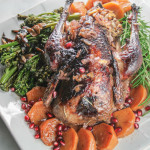
A recipe that will make you game for pheasant
Roasted pheasant stuffed with wild rice served with pomegranate and persimmon sauce makes a flavorful winter dish.
I'm sorry, but the page you're looking for could not be found. Below are our most recent articles. Perhaps you'll find what you're looking for there.
Enter your email address below to receive updates each time we publish new content.


A recipe that will make you game for pheasant
Roasted pheasant stuffed with wild rice served with pomegranate and persimmon sauce makes a flavorful winter dish.
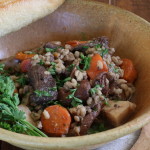
Using goose meat in a stew of beef broth and wine tones down its gaminess and chanterelles, celery root and carrots add a touch of winter flavor
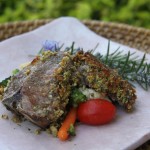
Easy lamb entrée for Easter reflects Oregon flavors
For Easter, lamb as well as ham are traditional entrees. So I set out to create a low-intimidation lamb recipe that can be easily tackled by most home cooks as well as include uniquely Oregon flavors.
For this recipe, I use lamb chops, which are easily found at grocery stores (even Winco carries them) and are easy to cook, and I combined them with an herb rub of sage, rosemary and juniper berries to complement the flavor of the lamb and then included a glaze using Marionberry jam and a crust of hazelnuts and bread crumbs to give it a signature Oregon flavor.
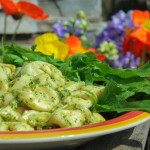
Celebrate spring with dandelion greens pesto, lasagna
For most of us, dandelions are obnoxious weeds. They’re something to be pulled, yanked and banished from well-manicured lawns. But consider this: Their leaves are edible and according to the University of Maryland Medical Center, they’re full of vitamins A, B, C and D as well as minerals such as iron, potassium and zinc. You can use them in most in recipes that call for spinach.

Pasta Shells with Tuna, Capers, Lemon, Olives and Tomatoes - A No-cook Sauce
In the world of canned tuna, there’s much more than Starkist or Bumble Bee. Water packed tuna was all the rage a few decades ago for those eating on the lean side but oil packed, especially olive oil packed is the best choice for ultimate flavor – even if you just eat it out of the can with a fork. A multitude of tuna salads can reach ethereal heights if made with high quality tuna and our home canned fish will provide the back bone for this chunky, no-cook pasta sauce.

Spaghetti in Cream Sauce with Shrimp and Bacon Meatballs
I love shrimp! I love bacon! Shrimp loves bacon and bacon loves shrimp. We’re such a lovey-dovey group
Grinding them both up into some savory meatballs for pasta in a creamy sauce seems like a perfectly natural thing to do.
As a twosome, shrimp and bacon go back a long way. Back in the cocktail buffet days they appeared on tables as devils on horseback, a variation of angels on horseback. Often oysters or chicken livers stood in for the shrimp.
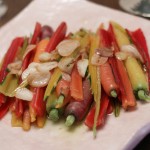
Rainbow chard adds burst of color to spring table
Swiss chard always has been a mystery to me, taking the line behind collard greens and kale, both of which I’m much more familiar with. But walking by the produce aisle at Roth’s Vista store the other day, I was stopped dead in my tracks by these beautiful specimens in the organic section, beaming like […]
Celebrate spring with dandelion greens pesto, lasagna
For most of us, dandelions are obnoxious weeds. They’re something to be pulled, yanked and banished from well-manicured lawns. But consider this: Their leaves are edible and according to the University of Maryland Medical Center, they’re full of vitamins A, B, C and D as well as minerals such as iron, potassium and zinc. You can use them in most in recipes that call for spinach.
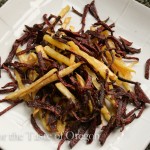
Garlic-tossed Sweet Potato and Beet Fries— Fall’s Sweet Treat
It’s fall. Chilly nights. Rainy days. Movie night at home requires a throw blanket, a warm fireplace a chick flick or buddy flick to warm the heart, and a switch from a glass of white wine or amber beer to a glass of hearty red wine or a stout beer. What to do for finger food? Forget the popcorn or bag of chips. Savor the sweet flavors of fall with sweet potato and beet fries, kicked up a notch by tossing with garlic seasoning.

Tortilla Española - A Chip off the Old Block
In Spain, tortillas are the Iberian equivalent of Italian frittatas which use beaten eggs to bind all the ingredients together. Spanish tortillas utilize sliced potatoes and onions as the main ingredients and are sometimes further embellished with small bits of Serrano ham and/or piquillo peppers. In our house, frittatas are a catch all for rendering leftovers into something new for dinner.

Savory Oregon country-style pâté
I’ve always had a fascination with pâté. There are so many variations, from dense to creamy, but they all have that rich flavor in common. You can also make pâté from a variety of foods, including ground pork, chicken livers, vegetarian ingredients like mushrooms and lentils, and then there’s foie gras. Now before you start […]

There was a time when I didn’t need a reason to drive to Portland for a casual visit or just to enjoy a day in our area’s most accessible metropolis. Gas was cheap - well, at least it was under $2 a gallon, and I could leisurely drive the 40 or so miles and cruise around town for less than $10. Now I usually wait until I have at least three reasons to make the trip, except for one recent Saturday. I desperately wanted some fresh salmon roe to play with…fuel costs be damned!
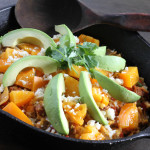
Enjoy a lazy Sunday and treat yourself to Migas
There are about as many versions of Migas as you can imagine. It’s basically scrambled eggs kicked up an infinite level, with chorizo (Mexican sausage), tomatoes, jalapeños, cheese, tortilla strips and salsa verde or salsa roja. My spouse first introduced me to Migas when we lived in Forth Worth, Texas. It’s one of those dishes that has come to remind me of what Sundays are for, relaxing and enjoying the moment and yourself.
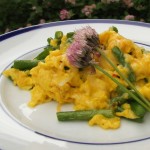
Garlic whips adds texture and flavor to scrambled eggs
Garlic and asparagus are two of my favorite foods. To me, garlic whips combine the best of both: a wonderful mild garlic flavor with the green herbaceous flavor and crunchy texture of asparagus. When the weather turns nice in the spring, start looking for garlic whips to make an appearance at farmers markets and local […]
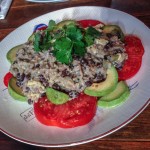
Turn leftover black beans and rice into breakfast treat
Let’s face it. We all face those miserly moments when faced with leftovers brought to the kitchen from the dinner table when we scrape and package leftover side dishes and main dishes into tupperware containers and place them into the fridge, vowing to finish them another day or find another use for them. But most […]
Using goose meat in a stew of beef broth and wine tones down its gaminess and chanterelles, celery root and carrots add a touch of winter flavor

Open-face Buffalo Stew Sandwich — It’s Boffo!
The weather in the Mid-Willamette Valley has turned cool and wet again. It’s the perfect weather to light a fire in the fireplace, turn on some relaxing music and cozy up to a serving of hot stew and a glass of pinot noir.

Pork Hocks Slow-braised in Sweet Dark Soy Sauce and Star Anise
I’m convinced that there are spices that can make you high. I can be roaming the streets of Portland, Vancouver, B.C., Hong Kong, Singapore, Thailand, and my hair will start to vibrate and stand on end when I get that first whiff of star anise in the air. My heartbeat quickens. My sweat glands go into overdrive. I start blinking uncontrollably, as my mind disconnects from my body and my feet start searching for the source of the heavenly aroma. Pungent, sweet, savory. Like licorice but more intoxicating. It’s a key ingredient in one of my favorite Thai dishes of ethnic Chinese origins, a stew of hard-boiled eggs, sweet dark soy sauce and pork hocks, that is flavored with star anise and cinnamon.

Watermelon and Heirloom Tomato Salad: best of both worlds
You wouldn’t normally think of combining watermelons and another summertime favorite: heirloom tomatoes. But they actually go well together. The sweetness from the watermelon brings out the sweetness in the tomatoes and the tomatoes also provide a contrasting tart note.

Warm Chanterelle Salad with Speck, Poached Eggs and Marsala Vinaigrette
If you’re looking for an earthy ingredient, look no further than mushrooms, especially wild, foraged ones fresh with the smell and taste of the forest floor.
Mushrooms are the meat of the vegetarian world. They offer a meaty umami flavor to many dishes. Umami is a Japanese word which translates to pleasant savory taste.

Warm Caprese Pasta Salad with Sopressata
Insalata Caprese, a simple salad in the style of Capri, is so simple that you must use the very best ingredients in season or it will by ordinary at best. The required ingredients are fresh tomatoes, fresh mozzarella, basil and good olive oil.
It is traditionally served as an antipasto. Additional ingredients are often added and could include garlic, balsamic vinegar and in this rendition, sopressata, an Italian style dry salami. Let’s go one step further and push it right into the primo course by including some freshly cooked bow tie pasta.

Nowadays, you don’t have to go foraging for mussels at the beach. Farm-raised mussels are so common that fresh mussels are available at most grocery stores year-round. One of my favorite ways to prepare them is in a Thai style with peppers, basil and a sweet and salty sauce. You can make it a starter or part of a meal by pairing it with another stir fry.

The Thai Bite is a celebration of food and culture
A little rain didn’t dampen the enthusiasm of hundreds of people who came to satisfy their appetite for Thai food and culinary adventure Sunday at Wat Buddha Oregon, the Thai Buddhist Temple nestled in the woods in Turner. For a donation into the collection boxes that lined the food tables, visitors got to sample such […]

Tacos have become such a part of mainstream American cuisine that on the West Coast other ethnic groups have begun topping the ubiquitous corn tortilla with their cultural culinary specialties. Forget the fish taco, ground beef taco, or shredded beef taco. Their time has come and gone. In Los Angeles and Seattle you can find Vietnamese and Korean food-truck chefs who are creating the latest taco sensations: Korean barbecue and Kimchi tacos, Bulgogi tacos, Vietnamese lemongrass chicken tacos. I mean, when you see a dozen kinds of tacos available in the neighborhood supermarket, and Taco Bells show up in China, what would you expect, right? The taco is ripe for a cultural hijacking. And so this native Thai decided that the time was ripe for….ta da…a Thai taco.

Tuna adventure ends with delicious Albacore Poke
Ever since I became and avid fisherman not long after moving to Oregon, I’ve dreamed of fishing for albacore tuna. But the hefty cost, time commitment and other things conspired to keep it an unrealized dream for nearly 10 years. Finally, the past week during my two-week staycation, my spouse and my mother gave me […]
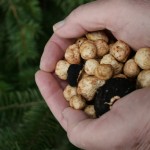
We had gotten a whiff of the lore about Oregon white truffles more than 10 years ago, before my partner, Charles Price, and I moved to Oregon from Baltimore. But it wasn’t until a few years after we got here that we truly were infected with the truffle bug. At first, the idea of Oregon […]

Pan-fried Razor Clams — A Trip to Sunset Beach Pays Off
Love of razor clams will make you go to great lengths if you’re an outdoor adventurer. It drove Mom and me to get up at 3:30 a.m. recently on one of my days off in order to pick up friends Tina and Allison Martin and head out on the three-hour drive from Salem to Sunset Beach, north of Seaside, Oregon, in time to get there for the minus low tide at 7:30 a.m. I can’t remember the last time I got up at 3:30 a.m. Nor can I remember the last time I drove 125 miles to catch dinner.

Beyond brews: McMenamins has history in wine, too
Edgefield and McMenamins are names most Oregonians associate with beer and pub-style food. But wine? Yes, they do make wine. In fact, pretty good wine. When you think of Oregon wine, pinot noir comes to mind. But there is a burgeoning syrah scene in the Northwest, and one of its most enthusiastic fans is McMenamins […]

Mahonia Vineyard making mark in Portland
I had the pleasure recently of visiting with John Miller, owner of Mahonia Vineyard, and Travis Henry, Mahonia’s vice president who handles sales and marketing, and getting a chance to learn more about their operation and their wines. This small producer in South Salem has been growing and making wonderful wines for more than 20 […]

Unoaked Oregon chardonnays let delicate flavors shine
Sometime in the past couple of years, I’ve come to appreciate drinking chardonnays that aren’t drenched in oak, which can mask some of the more delicate flavor notes of chardonnay. Fermenting in oak can add a golden color and flavors of butterscotch or toast to the wine. But with shifting American palates, more and more […]

Pork Fat Rules! Here’s an easy way to render pork fat, complete with video
There are occasions when you’re cooking that nothing can surpass rendered pork fat. You’ll be amazed at how much more flavorful your hash browns are, or any potato for that matter, when cooked in pork fat. Or how robust your sauteed green beans will be. Or delectable your collard greens. Or how flaky your pie crust will be. Or how rich your quail or pheasant will taste when seared in pork fat. Instead of buying commercially available lard bricks at the store, I prefer to render pork fat myself. You’ll be surprised how easy it is to do, and how long it can keep in the refrigerator in a mason jar.

Video: Have an Adventure Cutting Your Christmas Tree in the Mountains
For $5 you can get a BLM Christmas tree cutting permit and have an adventure cutting your own tree in the Willamette National Forest.

Domaine Drouhin Oregon — Beautiful Pinot Noirs and Chardonnay
Parlez-vous français? No? Well, that’s OK. English is perfectly fine at Domaine Drouhin Oregon, the U.S. outpost of the famed Maison Joseph Drouhin of Beaune, France. According to Domaine Drouhin, the first seeds for what would become Domaine Drouhin Oregon were sown in 1961. Robert Drouhin, head of Burgundy’s legendary Maison Joseph Drouhin, was visiting […]

Elk Cove Vineyards in Gaston has a beautiful setting and focuses on making excellent pinot noir and pinot gris. It’s La Bohème Pinot Noir has been served twice at the White House during President Clinton’s term.

Commonly known as Sisters, but properly named Three Sisters, these three volcanic peaks of the Cascade Range each exceeds 10,000 ft in elevation. They are the third, fourth and fifth highest peaks in Oregon and are located in the Three Sisters Wilderness, about 15 miles southwest of the town of Sisters, Oregon. The three peaks were originally named Faith, Hope and Charity by early settlers but the names didn’t stick.